If you understand creativity the way Simon Rogers does, it will become the most powerful tool for your project
Authors
Categories
Creativity is not design, a company logo or well-crafted business cards. It is the ability to see something that does not yet exist and make it real, tangible and desirable for others. That is why it becomes a vital tool for any venture.
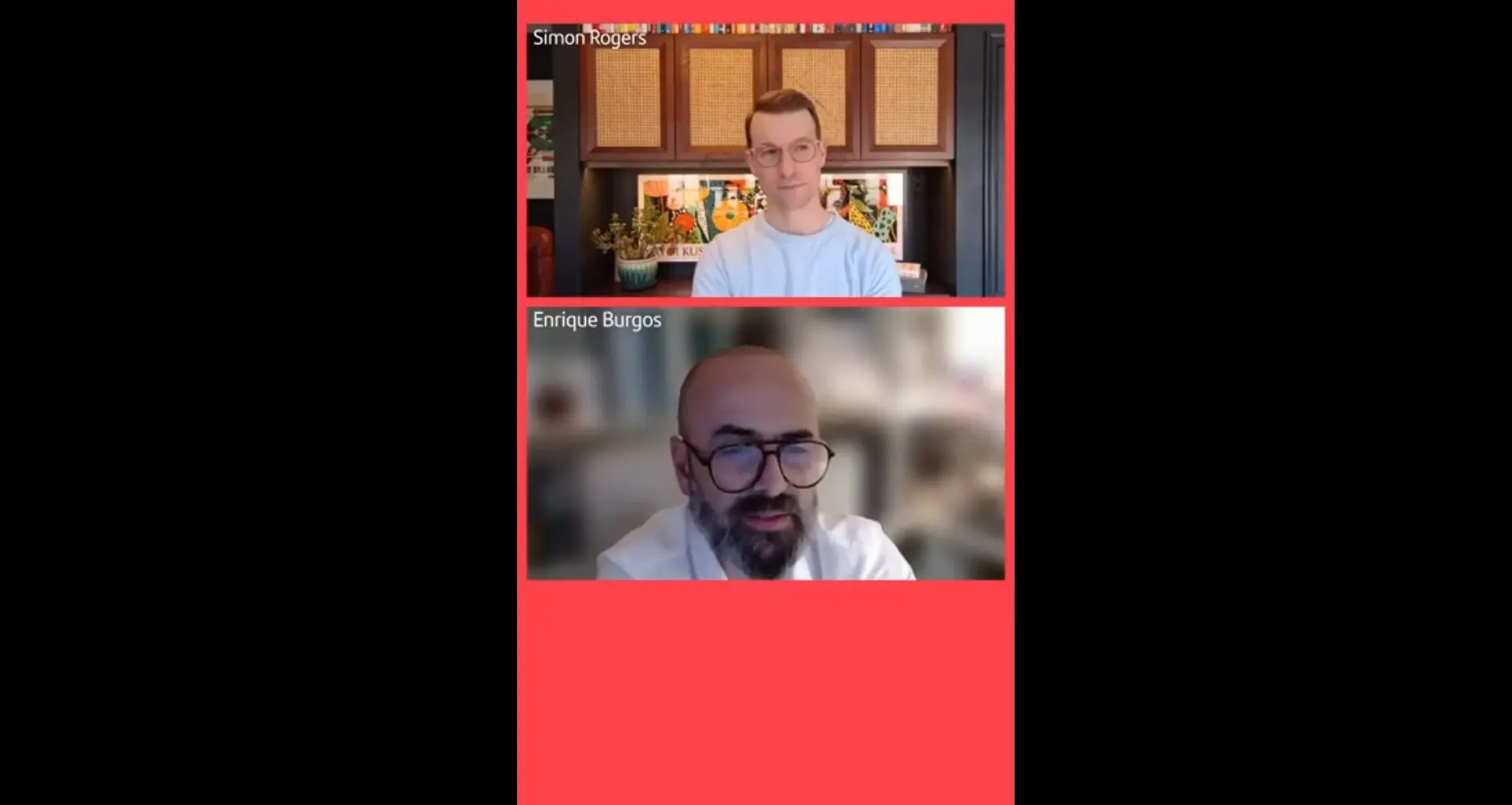
Simon Rogers, CEO of ALBC (A Little Better Co., a creative accelerator whose mission is to help companies unlock their impact and make the world a slightly better place), sees this capability in exactly that way. Joined by Enrique Burgos, host of the TalkX at Santander X Explorer and Director of Innovation and Growth at ALBC, he explained to attendees why changing the way we think about creativity is so important for any project.
“Creativity is not a luxury, it is an accelerator.”
Enrique opened with this statement, prompting the audience to rethink what they believed about the subject. “In entrepreneurship, I have repeatedly seen founders invest in technology, legal matters, operations and finance… and leave creativity, storytelling and narrative until last. This is, in many cases, the most expensive mistake you can make at the beginning,” he explained.
Fortunately, it is possible to learn how to use this tool strategically. To explore this, Enrique handed over to Simon: “Creativity is not just about how we express things; it is also a crucial business tool,” he said. “The companies that succeed are not necessarily those with the most accurate solutions, but those that position and promote themselves effectively.” Fair enough, but… how do we actually do that?
The five points where startups get stuck (and how to avoid them)
“Up to 90% of impact-driven startups fail within the first year, not because their ideas are inadequate, but due to poor communication and positioning,” Simon explained. Founders focus on building the product or the technology behind it, but forget to inspire people to believe in it. This leads to five common points of stagnation that the CEO of A Little Better Co. has clearly identified:
Positioning: their place in the market is unclear.
Brand image: the first impression is weak.
Engagement: people are not interacting.
Scalability: the business cannot expand effectively.
Transformation: the company cannot evolve or attract partners.
The solution, of course, is creativity: “Technology on its own will not transform your business, but creativity will. It is more important than capital: there is no direct relationship between how much money I have and the success of my company, but there is a clear relationship between my creativity and that success,” Simon added.
The creative strategy framework
At the beginning of time, communication was storytelling; that is how ideas were shared. The stories that have endured are those people connect with, because they pass them on. To achieve this in your project, Simon explained, you must focus on why your solution matters, not just on what you are building.
“Many great projects fail, while others that are objectively worse succeed. What makes the difference? The ability (of the latter) to connect with people. For people, how your idea makes them feel matters more than whether the project is technically complete.” — Simon Rogers
However, telling the right story for your audience can be challenging. That is why the CEO of A Little Better Co. shared his creative strategy framework, built around five steps:
Discovery: truly understand your audience.
Strategy: define how to move people from “I don’t care” to “I believe in this”.
Brand image: design a visual and emotional identity.
Tactics: build the tools (a landing page, your pitch, etc.).
Content: tell your story in the right way.
Step one is often the most difficult, as understanding your customers or users can be complex. Simon suggests asking yourself the following questions:
Who is my audience?
What do they feel?
What do they think?
Once you have these answers, you can build a story “for them, not for you”. And although there are many ways to tell a story, this entrepreneur recommends a simple, structured approach:
Situation: what is happening in the world. Challenge: what problem has been identified. Solution: how you solve that pain and transform people’s lives.
Can you use artificial intelligence as support? Absolutely. However, Simon warns that while AI can automate processes (such as content or design), empathy, understanding people, and identifying the right audience are irreplaceably human capabilities.
If you put this into practice, you will have a powerful tool. You now understand that creativity is not just about “making things look nice”; it is a strategic advantage that can determine whether your project moves forward or not.